
Stained Glass Beauty Photography: A London Editorial in Fractured Light and Colour
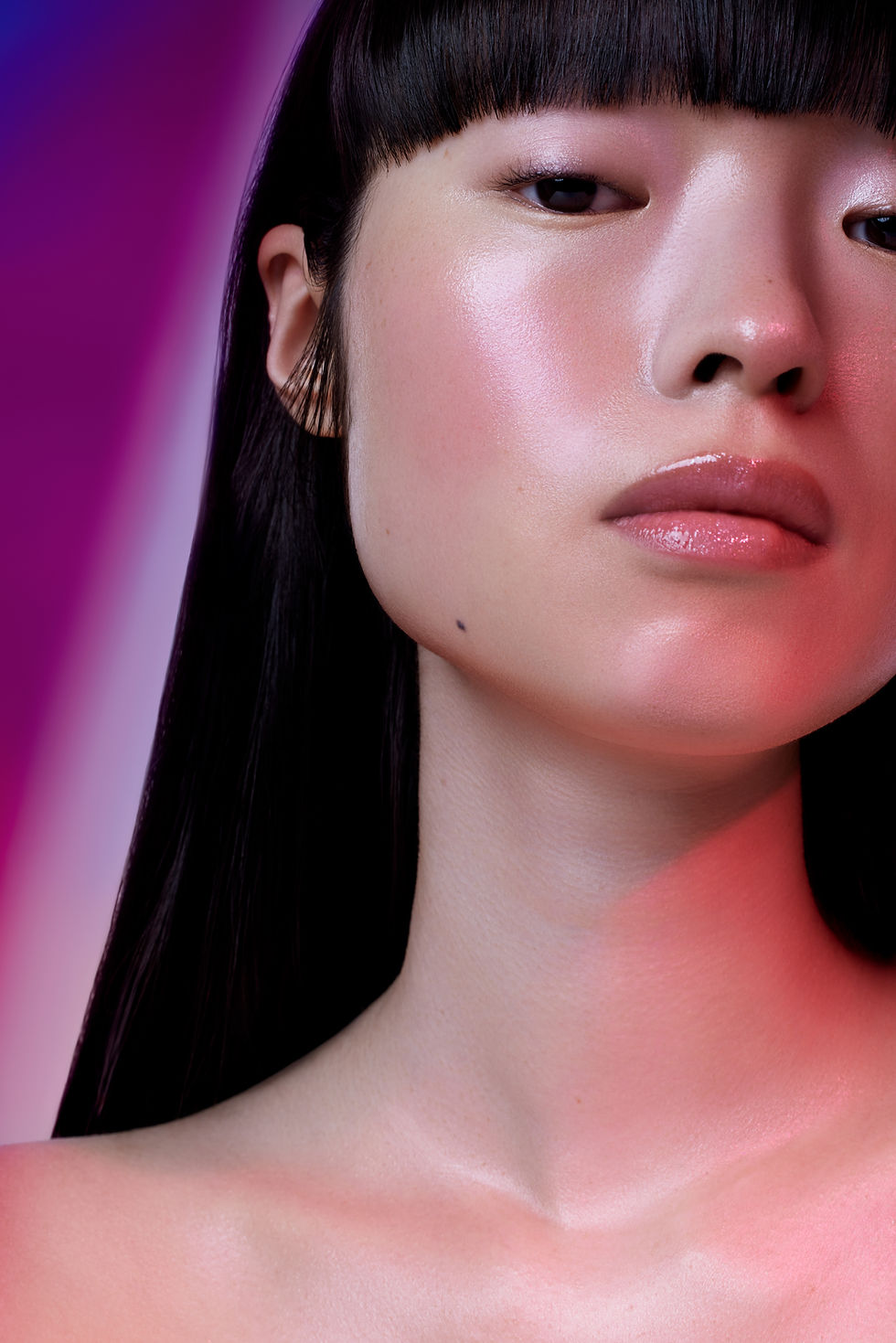
Stained glass beauty photography uses the fractured light and colour distortion of a stained glass window as a lighting reference, translating it onto skin with coloured gels to create an ethereal, metallic finish. This London-based editorial did exactly that — turning a beauty story into a study of light, colour and reflection.

The Concept: Turning a Stained Glass Window Into a Beauty Story
Every editorial shoot starts with a single reference point, and for this one it was a stained glass window — its fractured light, its layered colour, the way it distorts and reflects everything around it. Rather than photographing stained glass itself, the idea was to let it shape the mood of a beauty story: to use colour and distortion as the lighting language for the whole shoot, and let that light land on skin the way it lands on glass.
That starting point is what separates editorial beauty work from a standard commercial brief. There's no product to sell and no client mood board dictating the outcome — just a concept, a lot of gels, and the freedom to see where the light takes the story.

Lighting the Shoot: Gels, Reflections and Colour Distortion
The look was built almost entirely through coloured gels and controlled reflections, layering colour the way light passes through and bends inside a stained glass window. The result is imagery where colour doesn't just sit on the surface of the frame — it fractures across it, reflects back onto the model, and shifts the mood of each shot depending on how the light falls.
This is one of the more technical challenges in beauty photography: gels can easily overpower skin tone or flatten detail if they're not balanced carefully. Getting an ethereal, metallic finish on skin — rather than a muddy colour cast — meant treating the light itself as part of the makeup, and building the two in tandem rather than lighting around a finished look.

Ethereal, Metallic Skin: The Makeup Behind the Look
The metallic, almost luminous skin finish in this story was created by make-up artist Laura Marsh, whose work translated the shoot's stained glass concept directly onto skin. Metallic and reflective make-up finishes respond to coloured gel lighting in a way flat, matte finishes don't — they catch and bounce colour, which is exactly what a stained glass–inspired story needs to feel alive rather than simply tinted.
Pairing hair and make-up artistry this closely with lighting design is what makes editorial beauty photography distinct from a standard beauty shoot: the make-up isn't finished before the lighting begins, it's built to work with it.

Why Editorial Photography Matters
Editorial beauty photography exists to experiment — with light, colour and composition — in ways that commercial briefs don't always allow. There's no packshot to protect, no brand guideline to follow, and no single "correct" outcome to hit. That freedom is exactly why shoots like this one matter: they're where new lighting techniques get tested, where a stained glass window can become a full beauty story, and where a photographer, make-up artist and model can push a concept as far as it will go.
It's also where a photographer's personal style gets defined. Commercial and campaign work tends to ask for consistency; editorial work asks for a point of view.
Creative Team & Credits
This editorial was a collaboration between:
Photography: Kathrin Werner
Make-up Artist: Laura Marsh
Model: Natsumi, represented by Story Model Management

FAQ: Stained Glass Beauty Photography
What is stained glass beauty photography? It's an editorial photography style that uses the fractured light and layered colour of stained glass windows as a lighting reference, recreating that effect on skin — usually with coloured gels and reflective or metallic make-up finishes.
How do you create a stained glass effect in photography without a real window? The effect is built with coloured gels placed over lighting sources to fracture and layer colour across the frame, combined with reflective surfaces to bounce and distort that light the way glass would. Metallic or reflective make-up helps skin catch and hold the colour rather than absorbing it flat.
Why use gels instead of shooting an actual stained glass window? Gels give a photographer control over colour, intensity and direction that a fixed window can't offer, and they let the effect be shaped specifically around the model, the make-up and the composition rather than around where the sun happens to be.
What makes this an editorial shoot rather than a commercial one? There was no product, brand guideline or commercial brief driving the outcome — just a creative concept developed with the make-up artist and model, which is what gives editorial beauty photography room to experiment with light and colour in ways commercial work often can't.
About the Photographer
Kathrin Werner is a London-based photographer specialising in creative, editorial beauty photography — work that uses light, colour and composition to build a mood rather than sell a product. Connect with Kathrin on LinkedIn to see more editorial and beauty work.


Comments